Titanium Fiber Felt Weldable Machinable

Titanium Fiber Felt
December 23, 2025
Category Connection: Titanium Fiber Felt
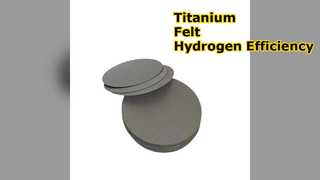
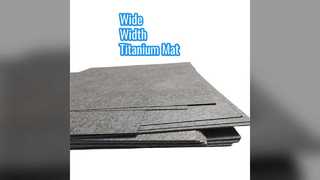
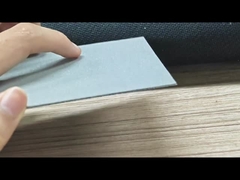
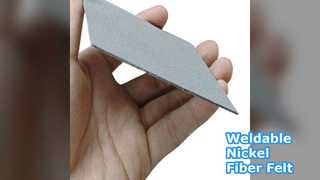
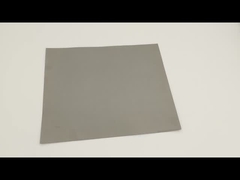
Brief: This video demonstrates the setup, operation, and key moments during typical use of our Laser Cutting Titanium Fiber Felt. You will see how this pure titanium material, ideal for AEM Hydrogen Production, is processed via laser cutting and high-temperature sintering, showcasing its weldable and machinable properties, exceptional thermal insulation, and corrosion resistance in demanding industrial environments.
Related Product Features:
  • Made from pure titanium with a high purity level of Ti≥99.8% for exceptional durability and performance.
  • Features a gradient pore structure and surface roughness of ≤30 μm for enhanced usability and efficiency.
  • Designed for AEM Hydrogen Production applications, excelling as a thermal barrier and blanket.
  • Offers excellent thermal insulation and corrosion resistance in harsh industrial environments.
  • Weldable and machinable, allowing for easy integration and customization in various setups.
  • Processed using laser cutting for precise dimensions and consistent quality in production.
  • Available in thicknesses from 0.15-2.0 mm and widths from 500-1000 mm to suit diverse needs.
  • Manufactured through high-temperature sintering, ensuring robust performance and reliability.
FAQs:
  • What is the brand and model number of this Titanium Fiber Felt?
    The brand name is Porous, and the model number is NPF-1.
  • Where is the Titanium Fiber Felt manufactured?
    It is manufactured in Deyang, China.
  • What is the minimum order quantity and payment terms?
    The minimum order quantity is 5 pieces, and payment terms are T/T (Telegraphic Transfer).
  • What are the key applications for this Titanium Fiber Felt?
    It is primarily used in AEM Hydrogen Production and serves as a thermal barrier, blanket, or mat for filtering, catalysis, and other industrial processes.
  • How is the Titanium Fiber Felt processed and what are its surface characteristics?
    It is processed via laser cutting for accuracy and has a surface roughness of ≤30 μm, along with a gradient pore structure for optimal performance.