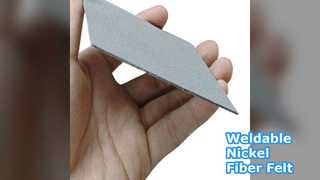
Titanium felt

Titanium powder felt
December 24, 2024
Category Connection: Titanium Fiber Felt
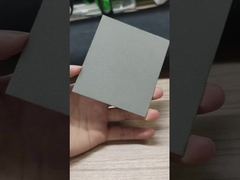
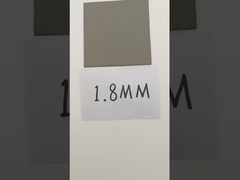
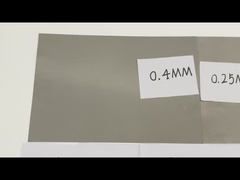
Brief: Explore what sets this solution apart in an easy-to-follow presentation. This video showcases the advanced Ultra Thin Titanium Fiber Felt for fuel cell applications, demonstrating its unique gradient pore structure, exceptional heat dissipation properties, and role as a microporous layer in high-temperature proton exchange membranes. You'll see how this material enhances gas diffusion and extends membrane electrode lifespan.
Related Product Features:
  • Features a controllable pore size and porosity for optimized performance in AEM hydrogen production applications.
  • Incorporates a gradient pore structure that enhances gas and liquid transmission within the fuel cell system.
  • Offers excellent heat dissipation properties crucial for high-temperature proton exchange membrane operations.
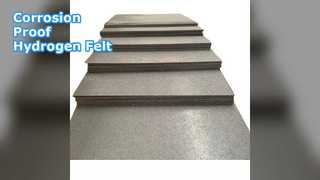
  • Provides resistance to medium corrosion, ensuring long-term stability in complex electrochemical environments.
  • Exhibits weldable and machinable characteristics for flexible integration into various fuel cell designs.
  • Maintains extremely low surface roughness to prevent membrane electrode puncturing and extend component lifespan.
  • Available in large widths up to 1000mm with thickness options from 0.15-2.0mm for diverse application needs.
  • Composed of high-purity titanium (≥99.8%) with minimal impurities for consistent performance and reliability.
FAQs:
  • What are the primary applications of this titanium fiber felt?
    This ultra thin titanium fiber felt is specifically designed as a microporous layer gas diffusion layer (GDL) for AEM hydrogen production and high-temperature proton exchange membrane fuel cells, where it facilitates electrochemical reactions and enhances gas diffusion.
  • How does the gradient pore structure benefit fuel cell performance?
    The gradient pore structure improves water and gas transmission performance, promotes efficient electrochemical reactions at lower temperatures and pressures, and helps prevent membrane electrode puncturing while extending the overall system lifespan.
  • What manufacturing specifications are available for this titanium felt?
    The material is available in thicknesses from 0.15-2.0mm, widths from 500-1000mm, with surface density of 0.6-2.0 g/cm³, average pore size of 12-20μm, and can be processed via laser cutting for precise integration into fuel cell systems.
  • What makes this titanium felt suitable for harsh electrochemical environments?
    The material offers excellent corrosion resistance, high stability, and is composed of pure titanium (≥99.8%) with minimal impurities, allowing it to operate reliably in complex electrochemical conditions while maintaining performance over extended periods.
Related Videos

Gradient titanium powder felt

Titanium powder felt
December 24, 2024

Gradient titanium powder felt

Titanium powder felt
December 24, 2024

Titanium felt

Titanium powder felt
December 24, 2024

Nickel powder felt

Nickel powder felt
December 24, 2024

Weldable Nickel Fiber Felt For Sale

Nickel Fiber Felt
December 23, 2025