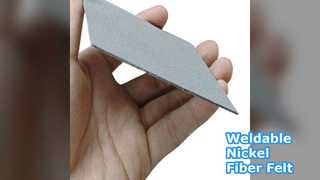
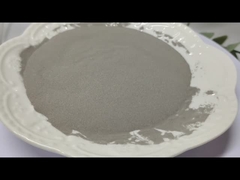
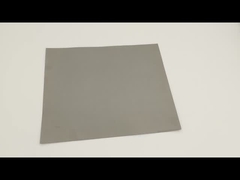
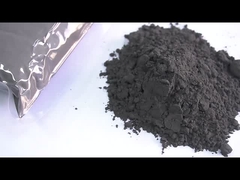
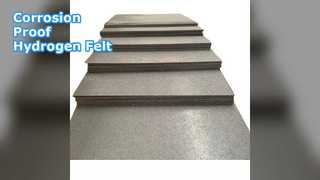
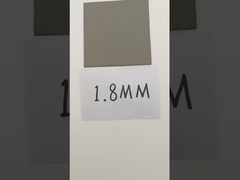
Brief: This video explains the main functions and practical uses in a clear, step-by-step format. Discover how the Ultra Thin Porosity High Nickel Sintered Felt is manufactured and applied as a core material for AEM hydrogen production, showcasing its unique properties and performance advantages.
Related Product Features:
Features a controllable pore size and porosity for customized performance.
Incorporates a gradient pore structure to enhance functionality.
Offers a large specific surface area for improved reaction efficiency.
Provides excellent water and gas transmission performance.
Exhibits superior electrical and thermal conductivity.
Resists high temperatures and thermal shock for durability.
Maintains resistance to medium corrosion in harsh environments.
Is weldable and machinable for easy integration into systems.
FAQs:
What is the primary application of this nickel sintered felt?
It is primarily used as a gas diffusion layer in AEM (Anion Exchange Membrane) hydrogen production equipment, facilitating electrochemical reactions and improving efficiency.
How does the pore structure benefit hydrogen production?
The controllable and gradient pore structure, along with a large specific surface area, increases the contact area with membrane electrodes, reduces resistance, and enhances gas and liquid transfer for optimal reaction rates.
What are the key material properties that ensure longevity?
The felt offers high temperature resistance, thermal shock resistance, and corrosion resistance, enabling stable long-term operation in complex electrochemical environments.
Can this nickel felt be customized for specific system requirements?
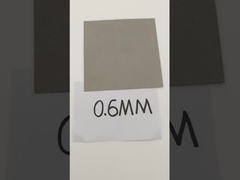
Yes, it is available in thicknesses from 0.15-2.0 mm, widths from 500-1000 mm, and with adjustable porosity and pore size, and it can be laser cut for precise integration.