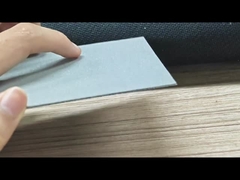
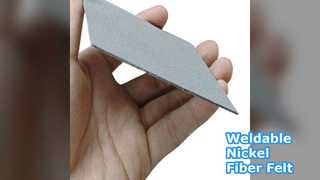
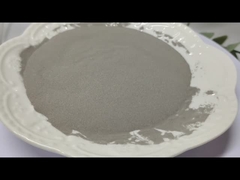
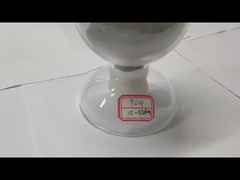
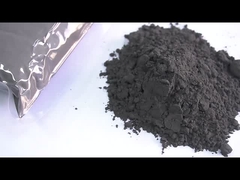
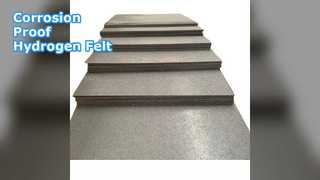
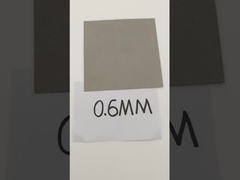
Brief: This video frames the solution within typical operational contexts for clearer understanding. We showcase the Borsemai-developed PEM Hydrogen Production Gas Diffusion Layer, a pure titanium powder felt. You'll see a detailed walkthrough of its unique gradient pore structure, flexible properties, and how it functions as the core material for efficient water and gas transport in electrolysis applications.
Related Product Features:
Features a controllable pore size and porosity for tailored performance.
Incorporates an asymmetric gradient pore structure for superior water vapor transmission.
Offers excellent electrical and thermal conductivity to minimize energy loss.
Provides high temperature resistance and thermal shock resistance for stable operation.
Exhibits excellent corrosion resistance in acidic, high-potential environments.
Is flexible, bendable, and weldable for easy integration into cell stacks.
Available in large widths and lengths with minimal surface roughness.
Supports efficient mass transfer of oxygen and water in PEM electrolyzers.
Faqs:
What is the primary application of this titanium powder felt?
It is designed as the Gas Diffusion Layer (GDL) for the anode side in PEM hydrogen production electrolyzers, facilitating the mass transfer of O2 and H2O.
How does the gradient pore structure benefit PEM electrolysis?
The asymmetric gradient pore structure ensures excellent water and gas transmission performance, which is crucial for efficient reactant supply and product removal in the electrolysis cell.
What are the key material advantages for the anode environment?
Made from pure titanium, it offers high corrosion resistance in acidic, high-potential conditions and can be coated with precious metals to further reduce contact resistance and extend service life.
Is the material suitable for large-scale manufacturing?
Yes, it is produced in widths up to 1000mm and is flexible and weldable, making it suitable for integration into large-scale PEM electrolyzer stacks.