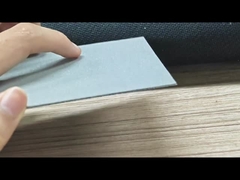
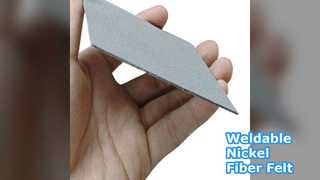
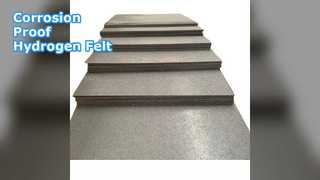
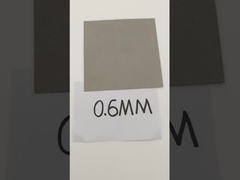
Brief: Learn how this solution can streamline typical workflows and improve reliability. In this video, we showcase the Borsemai Nickel Based Metal Fiber Felt, a flexible gradient gas diffusion powder felt with independent IP. You'll see a detailed walkthrough of its unique gradient pore structure, its excellent conductivity, and how its controlled porosity enhances performance in AEM hydrogen production applications.
Related Product Features:
Features a gradient pore structure with controllable pore size and porosity for optimized performance.
Offers excellent water and gas transmission performance for efficient electrochemical reactions.
Provides superior electrical and thermal conductivity to enhance energy transfer efficiency.
Exhibits high temperature resistance and thermal shock resistance for stable operation.
Resistant to medium corrosion and is both weldable and machinable for easy integration.
Has a large specific surface area and extremely low surface roughness to protect membrane electrodes.
Available in flexible, bendable forms with large sizes and widths for various applications.
Reduces contact resistance and prevents membrane electrode puncturing to extend component lifespan.
Faqs:
What is the primary application of this Nickel Based Metal Fiber Felt?
It is primarily used as a gas diffusion layer in AEM (Anion Exchange Membrane) hydrogen production systems, where it facilitates electrochemical reactions by transferring gas and liquid efficiently.
How does the gradient pore structure benefit the gas diffusion layer?
The gradient pore structure allows for controlled pore size and porosity, which enhances water and gas transmission, increases the contact area with the membrane electrode, and reduces contact resistance for improved efficiency and lifespan.
What are the key advantages of using this nickel powder felt in hydrogen production?
Key advantages include excellent electrical and thermal conductivity, high temperature and corrosion resistance, reduced surface spikes to prevent membrane damage, and stable long-term performance in complex environments, thereby increasing reaction efficiency and durability.